OPCB-221B Documentation
https://www.overvis.com/docs/pl/opcb-221b/
2026-07-30
 OPCB-221B Documentation OPCB-221B Documentation |
|---|
Overvis OPCB-221B
Overvis OPCB-221B to kontroler komunikacyjny przeznaczony do zastosowań przemysłowych. Jego główną funkcją jest podłączanie urządzeń MODBUS do systemu monitorowania Overvis Cloud lub innych systemów SCADA. Kluczowe możliwościDział zatytułowany „Kluczowe możliwości”
DokumentacjaDział zatytułowany „Dokumentacja”WsparcieDział zatytułowany „Wsparcie”
|
| OPCB-221B Documentation | ||||||||||||||||||||||||||||||||||||||||||||||||||||||||||||||||||||||||||||||||||||||||||||||||||||||||||||||||||||||||||||||||||||||||||||||||||||||||||||||||||||
|---|---|---|---|---|---|---|---|---|---|---|---|---|---|---|---|---|---|---|---|---|---|---|---|---|---|---|---|---|---|---|---|---|---|---|---|---|---|---|---|---|---|---|---|---|---|---|---|---|---|---|---|---|---|---|---|---|---|---|---|---|---|---|---|---|---|---|---|---|---|---|---|---|---|---|---|---|---|---|---|---|---|---|---|---|---|---|---|---|---|---|---|---|---|---|---|---|---|---|---|---|---|---|---|---|---|---|---|---|---|---|---|---|---|---|---|---|---|---|---|---|---|---|---|---|---|---|---|---|---|---|---|---|---|---|---|---|---|---|---|---|---|---|---|---|---|---|---|---|---|---|---|---|---|---|---|---|---|---|---|---|---|---|---|---|
OPCB-221B Operating Manual
This Operating Manual explains the design, safety requirements, operating rules, and maintenance procedures for the Overvis OPCB-221B controller. The Quality Management System of the device designing and production complies with the requirements of ISO 9001:2015. PurposeSection titled “Purpose”The Controller OPCB-221B (hereinafter referred to as the “Controller”, “Product”, “Device”, or “OPCB-221B”) provides MODBUS communication between clients and servers in TCP networks (Internet) and between devices in the RS-485 interface. OPCB-221B is used to remotely monitor and control the operation of:
OPCB-221B FeaturesSection titled “OPCB-221B Features”
Terms and AbbreviationsSection titled “Terms and Abbreviations”
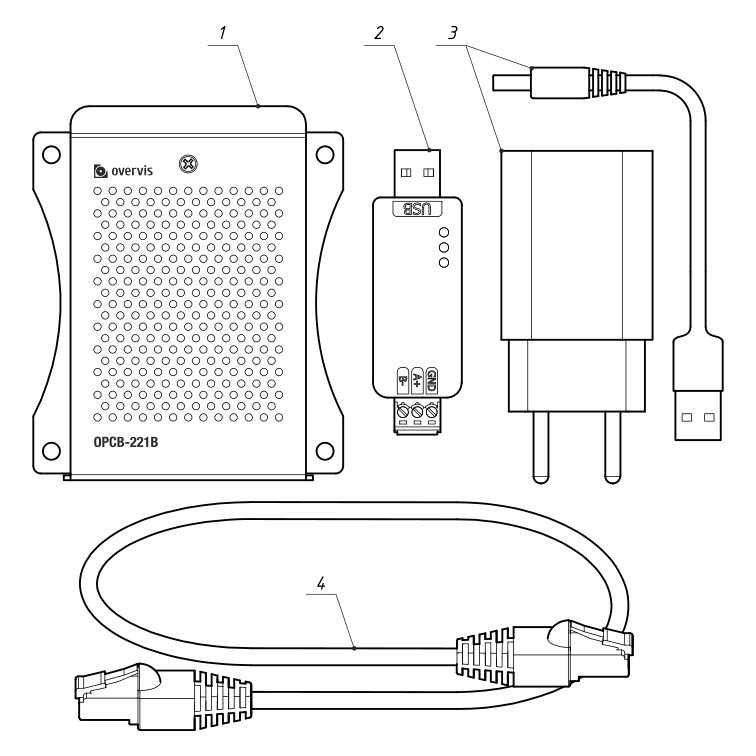
Complete SetSection titled “Complete Set”
Table 1 – Product Set
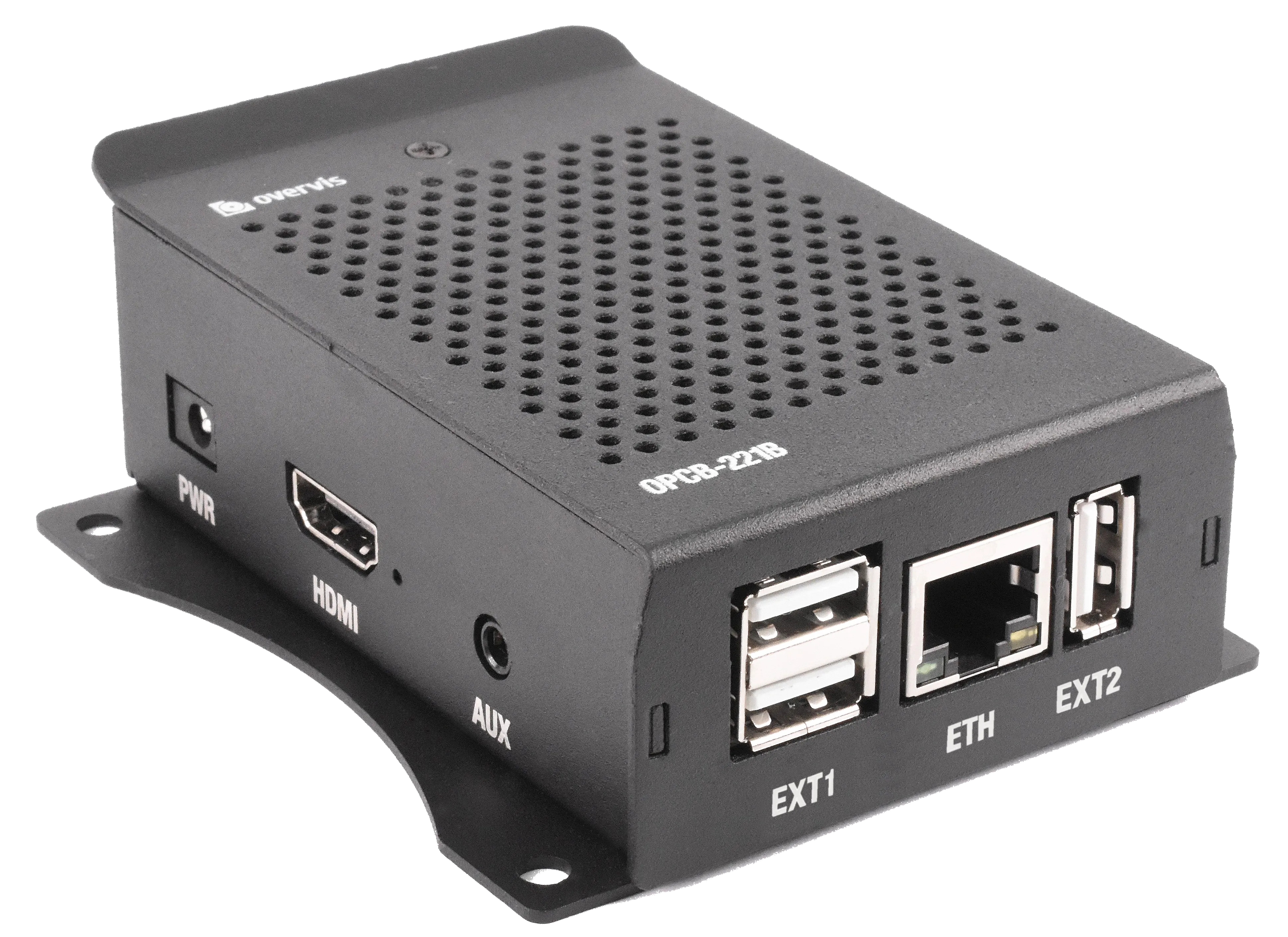
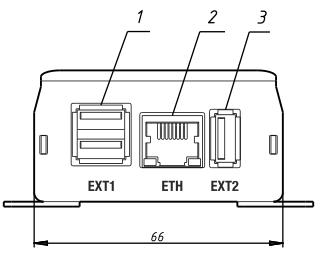
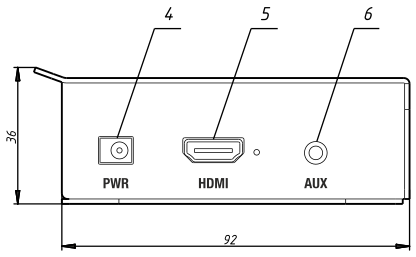
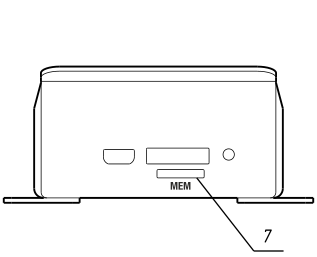
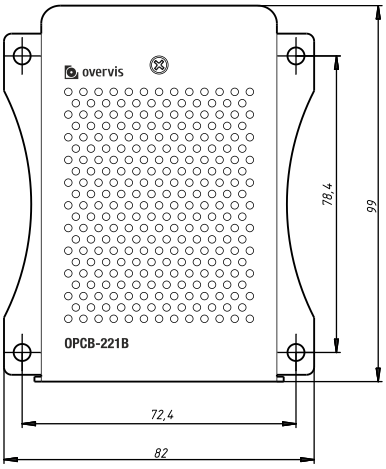
Overall Mounting Dimensions and ControlsSection titled “Overall Mounting Dimensions and Controls”
Figure 1 – OPCB-221B Overall and Mounting Dimensions Connectors and ControlsSection titled “Connectors and Controls”
Technical SpecificationsSection titled “Technical Specifications”OPCB-221B ControllerSection titled “OPCB-221B Controller”Table 2 – OPCB-221B Controller Main Technical Specifications
Standards Compliance:
USB-RS485 Extension ModuleSection titled “USB-RS485 Extension Module”Table 3 – USB-RS485 Extension Module Technical Specifications
Power AdapterSection titled “Power Adapter”Table 4 – Power Adapter Technical Specifications
Operating ConditionsSection titled “Operating Conditions”The product is intended for operation under the following conditions:
General InstructionsSection titled “General Instructions”When connecting to the RS-485 bus, use a twisted pair cable, cat. 1 or higher. Strip the ends of insulation by 4±0.5 mm and tighten with bushing tips. A shielded grounded cable is recommended. DO NOT LEAVE ANY BARE WIRE PROTRUDING BEYOND THE TERMINAL BLOCK. For reliable contact, tighten the terminal screws with the force indicated in the technical characteristics table. When connecting to Ethernet, use the supplied cable, or a twisted pair cable of cat. 5e with an 8P8C (RJ45) plug. When fixing the wires, avoid mechanical damage, twisting, or wearing down the insulation of wires. ConnectionSection titled “Connection”Before starting:
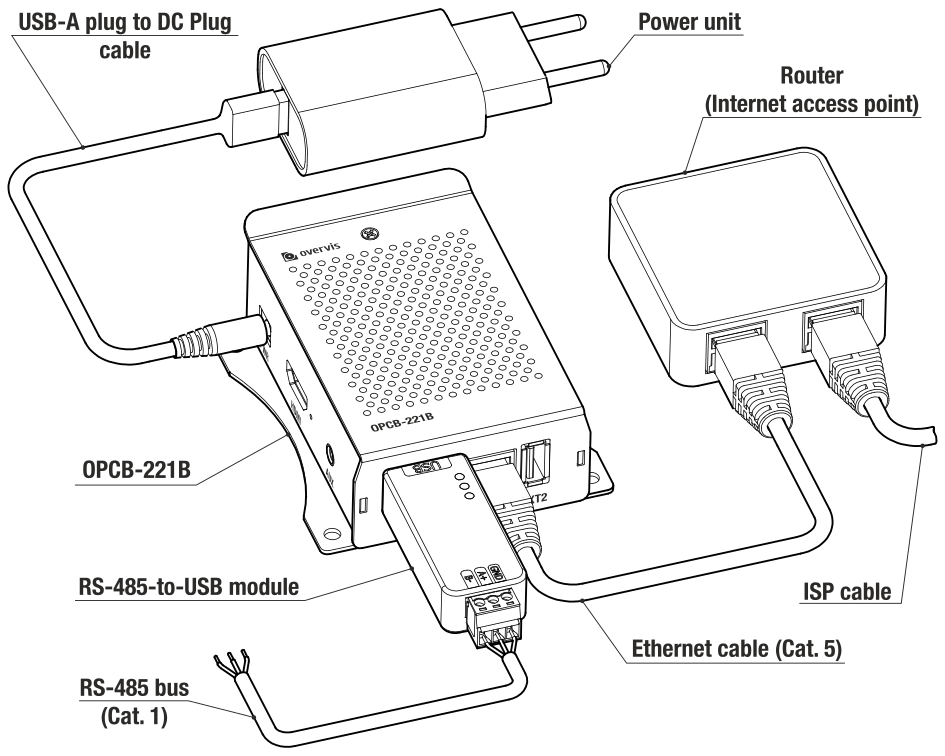
Figure 2 – Product Connection Diagram Connect OPCB-221B according to Figure 2, in the following order:
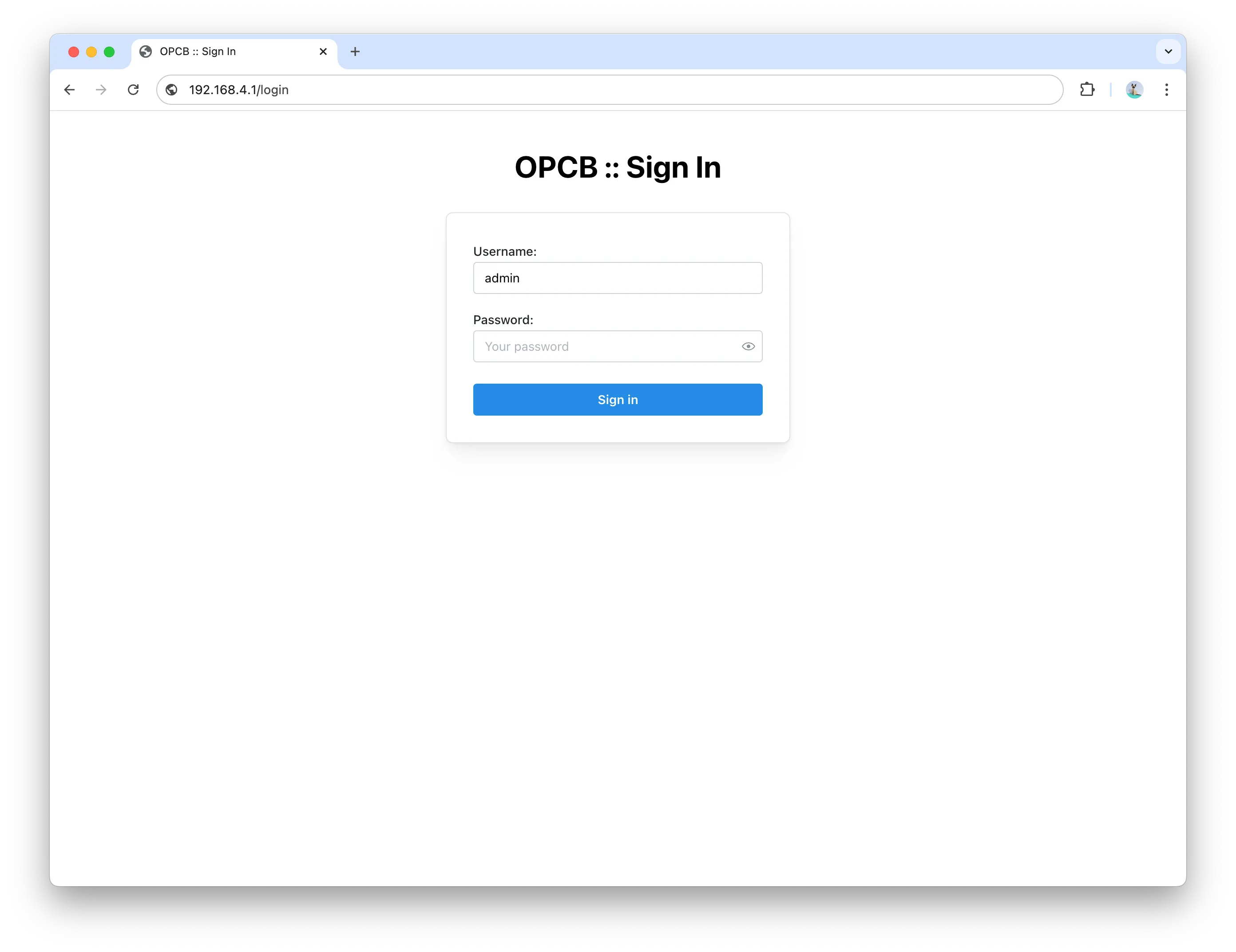
OPCB-221B OperationSection titled “OPCB-221B Operation”General InformationSection titled “General Information”OPCB-221B has a 32-bit processor running a POSIX-compliant OS (Armbian). It routes traffic between the USB extension modules, such as serial RS-485 / RS-232 interfaces (MODBUS RTU/ASCII protocols), and Ethernet/Wi-Fi LAN interfaces (MODBUS TCP protocol), possibly routed further to the Internet. OPCB-221B has a built-in web interface that can be used for configuration. OPCB-221B can connect to a cloud server for remote monitoring and configuration of the product and connected devices. OPCB-221B provides a Wi-Fi Access Point (hotspot) to simplify the initial setup. Wi-Fi Access Point can be disabled in the settings. OPCB-221B stores the operating system and data on the pre-installed microSD memory card. Removing or replacing the memory card will render the product inoperable. Power Up and Reboot SequenceSection titled “Power Up and Reboot Sequence”After powering up, OPCB-221B loads the operating system and sets up the communication interfaces. This process usually takes up to 1 minute. With an internet connection provided, OPCB-221B automatically connects to the cloud server if allowed in the settings. By default, unconfigured OPCB-221B creates a Wi-Fi access point with SSID “OPCB_XXXXXX” (where XXXXXX are the last 6 characters of the device’s MAC) and a password specified on the Registration sticker (attached to this manual). Soft Reboot: Use the web interface by pressing the “Reboot device” button on the “Control” page. This will finish all ongoing operations, store the data, and reboot the device within 1 minute. Hard Reboot: Turn off the power by unplugging the device, wait 5 seconds, and then turn the power back on. Operation via HTTPSection titled “Operation via HTTP”OPCB-221B provides an HTTP web interface and HTTP REST API for web applications. OPCB-221B accepts HTTP connections via Ethernet or Wi-Fi interfaces on TCP port 80. To access the HTTP web interface:
The default username for the web interface is “admin” with the password specified on the Registration sticker (attached to this manual). OPCB-221B Operation via MODBUS (TCP/RTU/ASCII)Section titled “OPCB-221B Operation via MODBUS (TCP/RTU/ASCII)”OPCB-221B receives MODBUS TCP requests via Ethernet or Wi-Fi interfaces and transmits them in MODBUS RTU or MODBUS ASCII format over the serial interface. Responses are converted to MODBUS TCP and sent back to the requesting side. OPCB-221B can also be configured to receive MODBUS RTU or MODBUS ASCII requests via the serial interface and transmit them in MODBUS TCP format to specified IP addresses via Ethernet or Wi-Fi interfaces. In this case, the responses (converted to the request protocol) are sent back to the serial line. Connections from a PC or mobile device can be made using any software MODBUS TCP clients. MODBUS registers of the OPCB-221B are configurable in the web interface on the “Connections” page in the section “OPCB Modbus access.” MODBUS routing between the connected devices is configured in the web interface on the “Connections” page in the section “Routing.” OPCB-221B Operation Using the Overvis Cloud ServerSection titled “OPCB-221B Operation Using the Overvis Cloud Server”OPCB-221B can establish connections to the Overvis cloud server using any interface with Internet access. OPCB-221B communicates with the Overvis cloud using an Overvis VPN connection, which provides full encryption of traffic between the device and the Overvis cloud server. Overvis VPN cloud connection is enabled by default and can be disabled in the settings. The cloud operation can be configured and managed by creating an account on the Overvis cloud: https://www.overvis.com/ Registration Sticker InformationSection titled “Registration Sticker Information”The OPCB-221B product set includes an Overvis Cloud registration sticker. Sticker information includes:
Access the link on the sticker and follow the instructions on the Overvis website to set up the device cloud operation and access the OPCB-221B interface through the Overvis cloud. Factory ResetSection titled “Factory Reset”A partial factory reset can be performed in one of the following ways: Using a control key USB flash drive:
Write an empty file or an empty folder named Through the web interface: Use the “Control” page in the web interface. Firmware UpdateSection titled “Firmware Update”Device firmware is updated continuously by the manufacturer. By default, the new version is installed automatically after the device is powered on or within 24 hours of operation. Automatic updates guarantee the backward compatibility of all OPCB-221B functions. Releases without backward compatibility require manual installation. The currently installed version is displayed in the OPCB-221B web interface. The changelog for each version is available here: https://github.com/overvis/opcb-release/blob/opcb/CHANGELOG.md Manual Firmware Update and Full Factory ResetSection titled “Manual Firmware Update and Full Factory Reset”A manual update requires a full factory reset by uploading a new firmware image to the SD memory card. All current firmware images can be found on the release page: https://github.com/overvis/opcb-release/releases Initial SetupSection titled “Initial Setup”The device can be configured via the web interface. Configuration parameters are stored in a file on the SD memory card. Step 1: Access the Web InterfaceSection titled “Step 1: Access the Web Interface”After the device is plugged in and operational, access the web interface by connecting to the Wi-Fi Access Point or using the local network. By default, an unconfigured OPCB-221B creates a Wi-Fi access point with SSID “OPCB_XXXXXX” (where XXXXXX are the last 6 characters of the device’s MAC) and a password specified on the Registration sticker (attached to this manual). Connect to the OPCB-221B Wi-Fi access point with a PC or mobile device and open the following URL in the browser: Step 2: Log InSection titled “Step 2: Log In”Log in to the web interface using the default username “admin” and the password specified on the Registration sticker (attached to this manual).
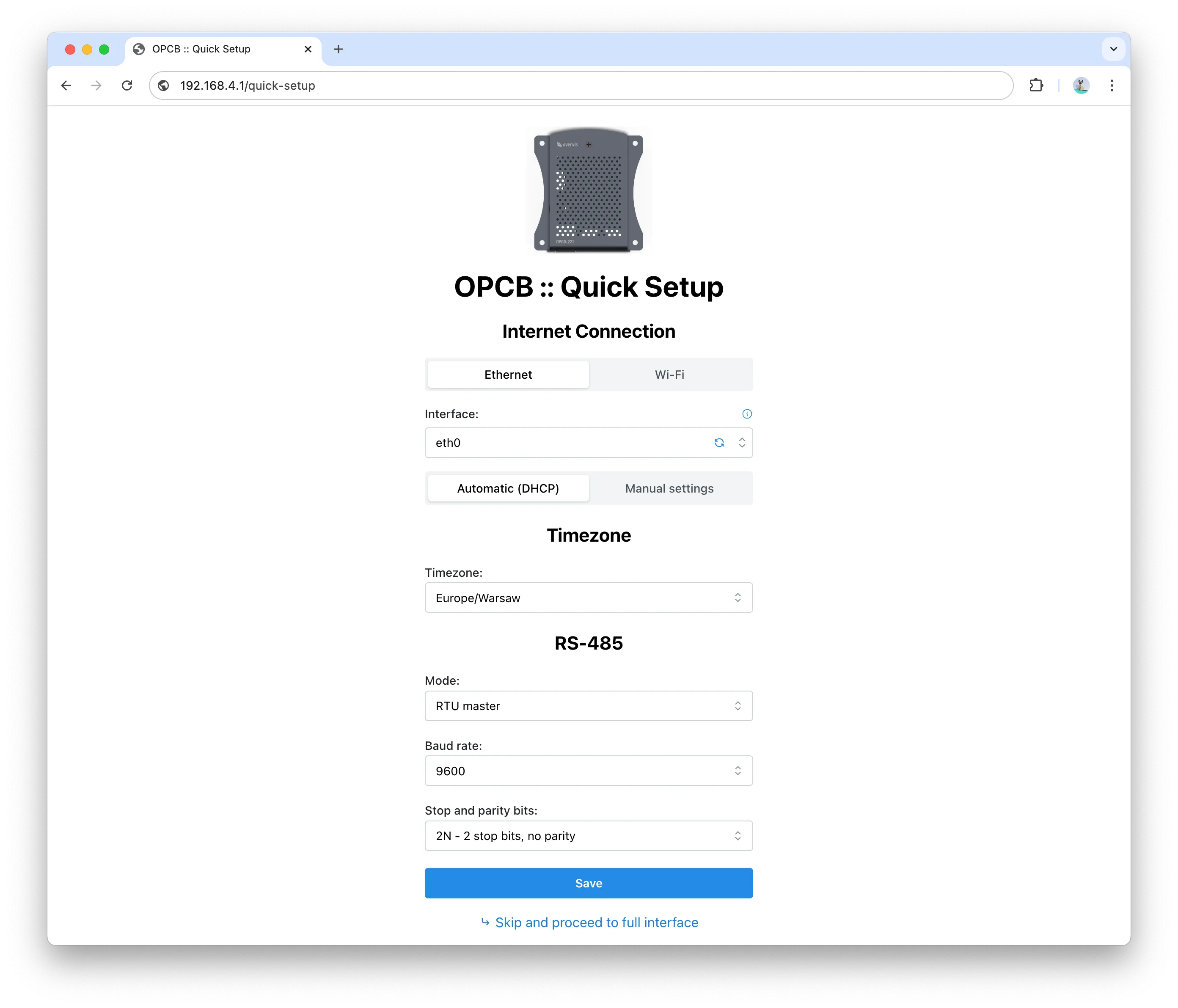
Step 3: Quick SetupSection titled “Step 3: Quick Setup”After logging in, the quick setup page will be displayed. If the device was configured previously and reconfiguration is needed, the quick setup page can be accessed from the drop-down drawer in the header under the logo.
Step 4: Connect to Overvis CloudSection titled “Step 4: Connect to Overvis Cloud”After the initial setup, the device will connect to the internet using the specified settings and will be available in the Overvis cloud. Access the link on the sticker and follow the instructions on the Overvis website to set up the device cloud operation and access the OPCB-221B interface through the Overvis cloud. Safety PrecautionsSection titled “Safety Precautions”To ensure the product’s safe operation, it is strictly forbidden to:
Water penetration on terminals and internal elements of the product is not allowed. During operation and maintenance, the regulatory document requirements must be met, namely:
MaintenanceSection titled “Maintenance”WHEN MAINTAINING, THE PRODUCT AND DEVICES CONNECTED TO IT MUST BE DISCONNECTED FROM THE POWER SUPPLY. Maintenance of the product should be performed by qualified technicians. Recommended frequency of maintenance is every six months. ProcedureSection titled “Procedure”
Do not use abrasives or solvents for cleaning. Service Life and Manufacturer WarrantySection titled “Service Life and Manufacturer Warranty”
At the end of its service life, please contact the manufacturer. During the warranty period (in case of failure), the manufacturer repairs the product free of charge. Warranty service is performed at the place of purchase or by the manufacturer. Post-warranty maintenance of the product is performed by the manufacturer at current rates. Before sending the product for repair, it must be packed in the factory or other packaging that prevents mechanical damage. If returning the product or submitting it for warranty (post-warranty) service, please state in detail the reason for return in the complaint information field. Transportation and StorageSection titled “Transportation and Storage”The product in its original packaging is permitted to be transported and stored at temperatures ranging from -45 to +60 °C and with relative humidity of no more than 80%. During transportation, the product should be protected from mechanical damage. Manufacturer Contact InformationSection titled “Manufacturer Contact Information”NOVATEK-ELECTRO LTD. Ukraine, 65007, Odessa, Admirala Lazareva str. 59
|